How Many Times Did the Risen Jesus Appear in the New Testament?
ARTICLE • This article recounts 25 distinct post-resurrection appearances and visions of Jesus in the New Testament, showing how both his bodily appearances and later manifestations strengthen confidence in the reality of his resurrection.
Read time: 10 min
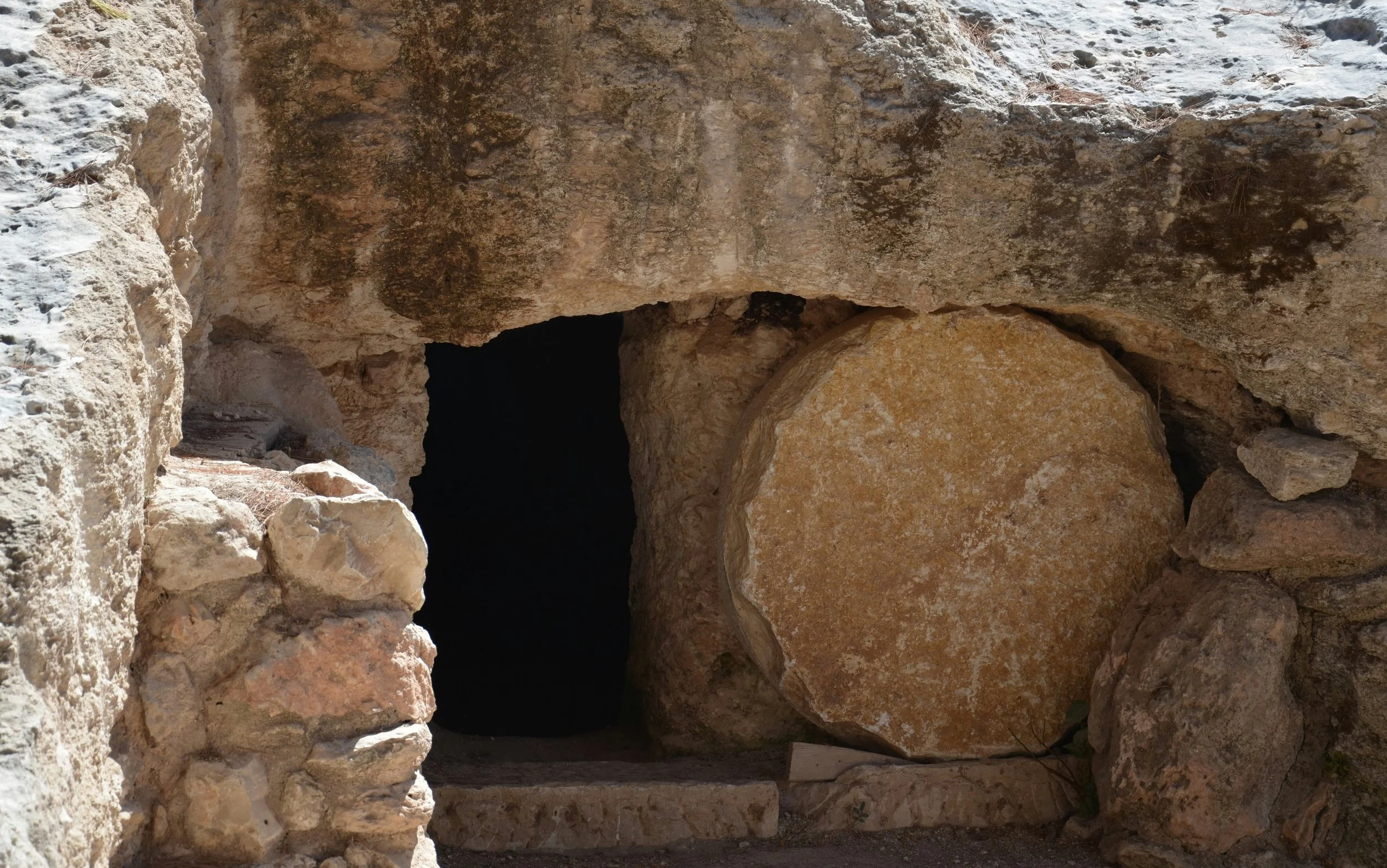
Christian claims about the bodily resurrection of Jesus have never lacked detractors. Some dismiss such claims as legend that developed decades after Jesus’ crucifixion. Others discount reports of the risen Jesus as hallucinations or mere religious enthusiasm. Still others dismiss eyewitness claims by pointing to an alleged limited number of witnesses.
But do these worn-out objections really fit the evidence from the New Testament? Were the post-resurrection appearances of Jesus only private experiences? Can hallucination explain not only one or two sightings but Jesus’ repeated appearances to individuals and groups, indoors and outdoors, in Jerusalem and Galilee, to friends, skeptics, and even a sworn enemy?
The evidence for Jesus’ resurrection—in terms of historical attestation—is highly and unusually robust. The New Testament records multiple and diverse post-mortem eyewitness testimonies. The foundational resurrection appearances during the forty days before the ascension present him bodily alive and present—speaking, showing his wounds, inviting touch and scrutiny, and eating with his disciples. Later post-ascension accounts relate the same risen Christ revealing himself to disciples in life-changing, history-shaping visions.
Luke’s detailed historical record summarizes the resurrection appearances during the forty days before the ascension well:
“He presented himself alive to them after his suffering by many proofs, appearing to them during forty days and speaking about the kingdom of God” (Acts 1:3).
The New Testament’s first-century sources document 25 distinct post-mortem appearances, visions, and manifestations of Jesus: the first 12 were physical, bodily appearances during the 40 days between his resurrection and ascension, and the remaining 13 were post-ascension visions or manifestations of Christ over the following decades.
The 25 Post-Mortem Appearances, Visions, and Manifestations of Jesus
Mary Magdalene at the tomb (A.D. 33; John 20:11–18; Mark 16:9–11): While weeping outside the tomb after first assuming Jesus’ body had been taken away, Mary saw him standing there but assumed at first he was a gardener. She recognized him when he spoke her name. As she reached for him, Jesus told her not to cling to him yet, then sent her to announce to the disciples that he was ascending to his Father and their Father.
The women on the road returning from the tomb (A.D. 33; Mary, the mother of James, with Salome, Joanna, and others; Matt 28:8–10): As they hurried away from the tomb with fear and great joy after the angel’s announcement that Jesus had risen, Jesus suddenly met them on the road, greeted them, received their worship as they clasped his feet, and told them not to fear but to go tell his brothers to leave for Galilee, where they would see him.
Peter on resurrection day (A.D. 33; Luke 24:34; 1 Cor 15:5): Jesus appeared privately to Peter sometime on resurrection day, in what seems to have been a deeply personal meeting after Peter’s public denials, so that by the time the Emmaus disciples returned, the others could already say, “The Lord has risen indeed, and has appeared to Simon” (Luke 24:34).
Cleopas and another disciple on the road to Emmaus (A.D. 33; Luke 24:13–32; Mark 16:12–13): Jesus joined them on the road to Emmaus, but their eyes were kept from recognizing him at first. He listened to their crushed hopes, rebuked their slowness to believe Scripture, interpreted Moses and all the Prophets concerning himself, and was then recognized in the breaking of the bread, at which point he vanished from their sight. They immediately returned to Jerusalem to share the news of having seen Jesus.
The ten apostles and others in Jerusalem (without Thomas; A.D. 33; Luke 24:36–43; John 20:19–23): On the evening of resurrection day, while the doors were shut for fear of the Jews, Jesus suddenly stood among them, spoke peace, showed them his hands, feet, and side, invited them to see that he was not a mere spirit, ate broiled fish in their presence, and commissioned them as the Father had sent him.
The eleven apostles one week later (with Thomas present; A.D. 33; John 20:24–29): Eight days later, Jesus again came while the doors were shut, stood among them with the same word of peace, directly addressed Thomas’s earlier demands by inviting him to inspect and even touch his wounds. This brought Thomas to the climactic confession, “My Lord and my God,” and Jesus pronounced a blessing on those who would believe without seeing his wounds.
Seven disciples by the Sea of Tiberias (A.D. 33; John 21:1–19): After an unproductive night of fishing on the Sea of Tiberias, Peter, Thomas, Nathanael, the sons of Zebedee, and two others saw a man standing on the shore. At his command, they cast the net on the right side and hauled in a great catch of 153 fish, after which Peter realized it was Jesus and rushed to shore. Jesus welcomed them to a charcoal fire with bread and fish already prepared, and as they ate together, Jesus re-commissioned Peter to the gospel ministry.
The eleven, and possibly many disciples with them, in Galilee for the Great Commission (A.D. 33; Matt 28:16–20): On a mountain in Galilee appointed by Jesus, the disciples saw him and worshiped, though some still hesitated, and there he declared that all authority in heaven and on earth had been given to him. He charged them to make disciples of all nations, baptizing and teaching them with the promise of his presence to the end of the age.
Over five hundred disciples at one time (A.D. 33; 1 Cor 15:6): Jesus appeared at one time to more than five hundred brothers, most of whom, Paul says, were still alive when he wrote, making this an especially weighty body of testimony rather than a private claim that could not be checked.
James, the Lord’s brother (A.D. 33; 1 Cor 15:7): Jesus appeared to James in a meeting not otherwise narrated in detail, yet significant enough to be singled out by Paul and likely important in explaining how one who had earlier been unconvinced (John 7:5) became a central leader in the Jerusalem church.
All the Apostles (A.D. 33; 1 Cor 15:7): Jesus appeared to the wider apostolic circle beyond the narrower resurrection-day group, further confirming his resurrection to those entrusted with foundational witness and strengthening them for their coming mission in the church.
The apostles near Bethany at the ascension (with up to 120 disciples; A.D. 33; Luke 24:50–53; Acts 1:3–17): After presenting himself alive during forty days with many proofs and speaking about the kingdom of God, Jesus led them out as far as Bethany, near the Mount of Olives, instructed them to wait in Jerusalem for the promised Spirit, told them they would be his witnesses to the ends of the earth. He lifted up his hands to bless them and was taken up before their eyes as a cloud received him.
Stephen at his death by stoning (A.D. 34; Acts 7:55–56): As Stephen was being martyred, full of the Holy Spirit he gazed into heaven, saw the glory of God and Jesus standing at God’s right hand, and openly testified that he saw the Son of Man standing there, a vision that sealed both Stephen’s witness and his death.
Saul on the road to Damascus (A.D. 34; Acts 9:3–6; 22:6–11; 26:12–18; 1 Cor 15:8): As Saul traveled to Damascus breathing threats and murder against the church, a light from heaven flashed around him, he fell to the ground, heard Jesus identify himself as the one Saul was persecuting, was struck blind, and was then commissioned to carry Christ’s name before Gentiles, kings, and the children of Israel.
Ananias in Damascus (A.D. 34; Acts 9:10–16): In a vision, Jesus called Ananias by name, directed him to the house where Saul was praying, answered Ananias’s understandable fear by revealing Saul’s calling, and commanded him to go because Saul was a chosen instrument who would bear Christ’s name and suffer for it.
Paul—post-conversion revelation of the gospel (A.D. 34–37; Gal 1:11–12, 15–18): Paul later explained that the gospel he preached was not of human origin and was not taught to him by man, but came through a revelation of Jesus Christ. He says that God was pleased to reveal his Son to him, and that he did not immediately consult flesh and blood or go up to Jerusalem to the apostles, but only after three years did he visit Peter, indicating that his gospel and commission came from Christ himself before his contact with the Jerusalem apostles.
Paul in the temple at Jerusalem (A.D. 37; Acts 22:17–21): After his conversion and return to Jerusalem, Paul was praying in the temple when he fell into a trance and saw the Lord speaking to him. Jesus warned him to leave Jerusalem quickly because the people would not accept his testimony about him. When Paul protested by recalling his former persecution of believers, the Lord answered by commissioning him to go far away to the Gentiles.
Paul in the “third heaven” (A.D. 41–42; 2 Cor 12:1–9): Paul recounts “visions and revelations of the Lord,” describing how he was caught up into Paradise in so real an experience that he could not tell whether it occurred in the body or out of the body. He heard inexpressible things there, and later testifies that when he pleaded concerning his “thorn in the flesh,” the Lord said to him, “My grace is sufficient for you, for my power is made perfect in weakness,” showing the risen Christ’s continued revelatory dealings with him.
Paul in Corinth (A.D. 50–51; Acts 18:9–10): While ministering in Corinth amid opposition and pressure, Paul received a vision in the night in which the Lord spoke directly to him. Jesus told him not to be afraid, but to keep speaking and not be silent, because he himself was with him. The Lord also assured Paul that no one would ultimately harm him there, for he had many people in that city.
Paul in custody at Jerusalem (A.D. 57; Acts 23:11): After Paul’s arrest in Jerusalem and the tumult surrounding his testimony before the Jewish authorities, the Lord stood by him during the night and strengthened him with a direct word of encouragement. Jesus told Paul to take courage, because as he had testified about him in Jerusalem, so he must also bear witness in Rome. This encounter confirmed both Christ’s presence and Paul’s coming mission.
John on Patmos—the Son of Man (A.D. 95–96; Rev 1:9–20): While exiled on Patmos, John heard a loud voice like a trumpet and turned to see the glorified Son of Man standing among seven lampstands, radiant and fearsome in majesty. John fell as though dead, but Jesus laid his hand on him, identified himself as the Living One who died and now lives forever, and commanded John to write what he saw for the churches.
John on Patmos—the Lamb and the scroll (A.D. 95–96; Rev 5:1–14): In heaven, after no one was found worthy to open the sealed scroll, John saw a Lamb standing as though slain in the midst of the throne. The Lamb took the scroll from the One seated on the throne, prompting worship from heaven’s court, which declared him worthy because by his blood he ransomed a people for God from every tribe, language, people, and nation.
John on Patmos—the Lamb on Mount Zion (A.D. 95–96; Rev 14:1–5): John looked and saw the Lamb standing on Mount Zion, accompanied by 144,000 who bore his name and his Father’s name on their foreheads. He heard heavenly music and a new song sung before the throne. In this vision, Christ appears as the victorious Lamb united with his redeemed people, who are marked as his own, kept pure, and devoted wholly to following him.
John on Patmos—the rider on the white horse (A.D. 95–96; Rev 19:11–16): John saw heaven opened and beheld Christ as the rider on a white horse, called Faithful and True, coming in righteousness to judge and make war. His eyes blazed like fire, many crowns were on his head, and from his mouth came a sharp sword. He was clothed in majesty and wrath, followed by heaven’s armies, and bore the title King of kings and Lord of lords.
John on Patmos—the coming Lord (A.D. 95–96; Rev 22:6–21): Near the close of Revelation, John heard Jesus speak directly, confirming the truth of the prophecy and declaring, “I am coming soon” (vv. 7, 12, 20) Christ identified himself as the root and descendant of David, the bright morning star, pronounced blessing on those who keep the words of the book, and warned against altering them. The revelation ends with Jesus presented as the living, speaking, and soon-coming Lord.
Where the Evidence Points
The cumulative New Testament data concerning the post-mortem manifestations of Jesus resist easy dismissal. The risen Christ is not reported as appearing in only one setting or to only one kind of witness, but to a strikingly varied company of improbable witnesses—people unlikely to suddenly revise their shattered expectations after seeing Jesus brutally murdered only days before: grieving women, demoralized disciples, frightened apostles, a skeptical Thomas, Jesus’ previously unconvinced brother James. Hallucination theories are particularly implausible in light of the early bodily resurrection appearances, which are repeated, varied, and filled with concrete historical detail, including identifiable people, places, conversations, wounds, meals, and moments of hesitation and recognition. The later visions do not replace those foundational bodily appearances, but rather extend the New Testament’s witness to Christ’s continued self-disclosure to his people.
The earliest witnesses are startled by Jesus’ bodily resurrection appearances, despite his earlier, multiple promises that he would soon die and rise from the dead (Matt 16:21; 17:22–23; 20:18–19; 26:32). They are pressed into the resurrection’s game-changing reality, and in many cases, overwhelmed by it; the later visions and manifestations of Christ then reinforce that same reality by showing the risen Lord continuing to reveal himself after his ascension.
Does this change the game for you? An unbiased reading of the cumulative eyewitness evidence begins where the earliest Christians themselves began: Jesus “presented himself alive to them after his suffering by many proofs” (Acts 1:3). ❖
Related Article
Quote or Share this Article
Footnote: Timothy J. Harris, “How Many Appearances Did Jesus Make After His Resurrection?”, Practical Theologian, April 2, 2026, https://www.practicaltheologian.com/blog/article-z9dtw-69b3c-52h4j.
Bibliography: Harris, Timothy J. “How Many Appearances Did Jesus Make After His Resurrection?” Practical Theologian, April 2, 2026. https://www.practicaltheologian.com/blog/article-z9dtw-69b3c-52h4j.